What EV Service Do Arvada Drivers Actually Need?
Arvada EV drivers should prioritize brake inspections, tire rotations, tread checks, and alignment. Regenerative braking, vehicle weight, and immediate torque change how these parts wear.
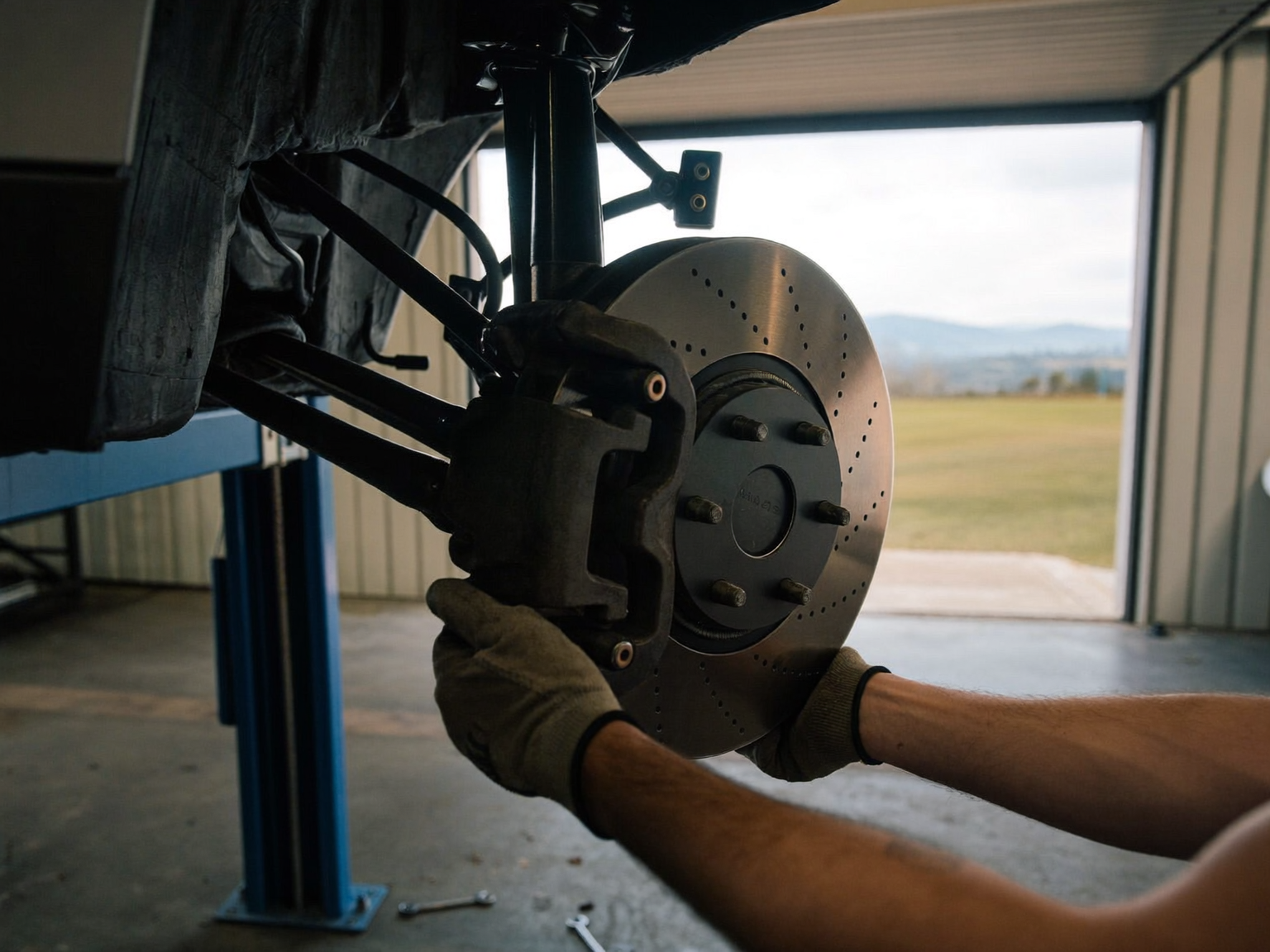
Arvada EV drivers need regular brake inspections, tire rotations, tread evaluations, pressure checks, and wheel alignment checks. Regenerative braking reduces some friction-brake use, but it does not eliminate brake service, while an EV’s weight and immediate torque can make tire condition especially important.
The battery and drive motor may get most of the attention, but brakes and tires are the parts connecting an EV’s technology to the road. For drivers commuting around Arvada or traveling into Boulder, their condition affects stopping, traction, ride quality, efficiency, and cabin noise.
Why EV Brakes and Tires Need Different Attention
EV brake and tire service is not simply conventional maintenance with the oil change removed. The basic components remain familiar, but their operating conditions can be different. Our EV maintenance service accounts for those differences instead of treating every vehicle the same.
Our broader EV maintenance overview explains the other systems that still require attention. Here, we are focusing specifically on the two wear areas Arvada EV owners encounter every day: stopping the vehicle and keeping it planted on the road.
Why can EV brakes develop problems even when regenerative braking does much of the slowing?
Regenerative braking uses the drive motor to slow the vehicle and recover energy, so the friction brakes may operate less frequently during ordinary driving. That reduced use can allow moisture, road film, and corrosion to remain on rotors longer, particularly after snow, slush, deicing material, or repeated short trips. Caliper slide hardware can also become stiff when it is not moving through its normal range often enough. We inspect rotor surfaces, pad condition, caliper operation, brake fluid, hoses, and electronic brake controls rather than assuming that lightly used pads mean the entire system is healthy. Drivers who need conventional or EV-aware brake repair in Boulder should expect the inspection to consider both mechanical braking and how it interacts with regenerative braking.
Why can an EV wear tires differently from a gasoline vehicle?
Many EVs carry substantial battery weight low in the chassis and deliver torque immediately, both of which can influence tire wear. Quick acceleration can work the driven tires harder, while frequent cornering, uneven pressure, or alignment changes can produce shoulder wear and irregular tread patterns. Some EVs distribute power through all-wheel drive, but that does not guarantee identical wear at every position. We evaluate tread across the full width of each tire, compare wear from side to side, verify pressure against the vehicle specification, and check for feathering, cupping, cracking, or impact damage. Timely rotation through professional tire services helps manage these patterns before noise or traction concerns become more noticeable.
What Should an EV Brake and Tire Visit Include?
A useful EV service visit should produce more than a glance at the tread and a statement that the brake pads still have material. We look at the complete operating picture, including how the driver uses the vehicle, what warning messages are present, and whether the symptoms occur during regenerative or friction braking.
What should a technician inspect in an EV braking system?
We inspect the brake pads and rotors, but we also check rotor surface condition, caliper movement, slide pins, flexible hoses, brake fluid, parking-brake operation, and visible wiring or connectors associated with the braking system. A road test can help separate normal regenerative behavior from pulsation, pulling, scraping, or inconsistent friction-brake engagement. If a warning light or unusual brake behavior suggests a control problem, our automotive electrical diagnostics can assess relevant circuits and electronic components. Because high-voltage systems require appropriate procedures, EV brake work should be performed with an understanding of the vehicle’s power-down requirements and manufacturer-specific service information.
Does an EV always need a tire labeled specifically for electric vehicles?
Not every EV requires a tire carrying an EV-specific label, but every replacement must meet the vehicle manufacturer’s requirements for size, load capacity, speed rating, and other fitment specifications. Tire construction can affect rolling resistance, road noise, steering response, ride comfort, and durability. These differences are easy to notice in an EV because the powertrain is quiet and tire noise is more exposed inside the cabin. We recommend choosing tires according to the vehicle, driving conditions, and manufacturer guidance rather than selecting by an EV label alone. A correct fit matters more than a broad marketing category.
When should an EV receive an alignment check?
An alignment check makes sense when we see uneven tread, a steering wheel that no longer sits straight, a persistent pull, or a change after a hard pothole or curb impact. Arvada streets, construction zones, winter pavement damage, and trips toward the foothills can all disturb alignment or expose worn steering and suspension parts. Rotation does not correct an existing alignment problem. It may move the visible wear to another position while the underlying cause continues. We first inspect the tires and suspension, then determine whether alignment measurement is warranted. This avoids treating an alignment as an automatic adjustment when a bent wheel, damaged tire, or loose component is actually responsible.
Warning Signs Arvada EV Drivers Should Notice
EVs are quiet enough that tire and brake symptoms may stand out earlier than they would in a vehicle with a running engine. Paying attention to when a symptom occurs gives us useful diagnostic information.
Which brake or tire symptoms should prompt an inspection?
We recommend scheduling an inspection for scraping or grinding, a brake pedal that feels different, vibration during stopping, pulling, visible rotor corrosion that does not clear with normal use, or a brake warning message. Tire concerns include new humming or droning, steering-wheel vibration, repeated pressure loss, uneven tread, sidewall damage, or a noticeable drop in traction. A sound heard only while braking may point us toward the friction system, while a sound that changes with road speed may be related to a tire, wheel, bearing, or brake component. If the concern appears only during regenerative deceleration, that distinction also matters. We do not replace parts based on a sound alone. We inspect, road-test when appropriate, and identify the source.
Colorado winter conditions deserve particular attention because an EV can use regeneration differently on slick roads or when its battery is cold. Our article about winter EV range and battery behavior provides more context, but the practical brake and tire lesson is simple: drivers still need dependable friction brakes and suitable tires even when regenerative braking handles much of their routine slowing.
EV Service for Arvada and the Front Range
For drivers seeking EV service in Arvada, local routes create a varied mix of operating conditions. Stop-and-go travel around Olde Town Arvada and Wadsworth Boulevard can involve frequent regenerative deceleration. Trips from Candelas toward Boulder on Colorado 93 expose tires to higher speeds, crosswinds, foothills weather, and changing pavement. Commuting toward Westminster or US-36 adds sustained highway driving, while winter snow and overnight temperature changes can reveal pressure loss or reduced traction quickly.
We provide auto repair for Arvada drivers from our Boulder shop and regularly work with vehicles arriving from communities across the northwest Denver area. Drivers continuing into the Boulder service area may encounter canyon approaches, steeper grades, and elevation changes that place different demands on braking and tires. Those traveling between Arvada, Louisville, and the Superior service area also deal with US-36 speeds, wind exposure, winter slush, and busy interchange traffic.
That local context matters. An EV used mainly for short neighborhood trips may be more vulnerable to brake rotor corrosion from limited friction-brake use. One driven regularly on highways may show tire noise, balance issues, or alignment-related wear sooner. We base our recommendations on inspection findings and actual use, not a generic assumption about all electric vehicles.
Building a Practical EV Service Routine
A sensible routine combines manufacturer guidance with observations made during rotations and inspections. Tire pressure should be checked when the tires are cold and adjusted to the vehicle specification, not the number molded into the tire sidewall. Rotations should follow the vehicle and tire maker’s guidance, especially when front and rear tire sizes differ or a directional tread limits rotation options.
Does regenerative braking mean EV brake pads last indefinitely?
No. Regeneration may reduce pad wear, but brake life still depends on vehicle design, driving conditions, corrosion, caliper operation, and how often the friction brakes engage. A pad can retain material while a rotor develops heavy rust or a caliper begins sticking. Conversely, mountain descents, emergency stops, traction-control events, and situations where regeneration is limited can call on the friction brakes more heavily. We inspect the complete system instead of predicting brake condition from mileage or regeneration settings. The same principle applies to tires: an EV may feel smooth and powerful while developing wear that is easiest to detect on a lift.
For most drivers, the practical approach is straightforward. Keep tires properly inflated, follow the correct rotation pattern, investigate new vibration or noise, and have the brake hardware inspected rather than relying only on pad thickness. If a tire repeatedly loses pressure or tread wear becomes uneven, address the cause before replacing the tire and hoping the problem disappears.
EV service in Arvada should preserve the qualities owners value in these vehicles: smooth response, quiet travel, predictable braking, and confident traction. We focus on the mechanical contact points that make those qualities possible, then use EV-aware procedures when electronic braking or high-voltage considerations enter the diagnosis.
Book the shop Boulder trusts.
Free loaner vehicles for qualifying repairs. Three-year, 36,000-mile NAPA warranty on every covered job.