What Does a Real Check Engine Light Diagnosis Include in Westminster?
A complete diagnosis goes beyond reading a stored trouble code. It uses vehicle history, live data, targeted testing, and verification to identify the fault before repairs begin.
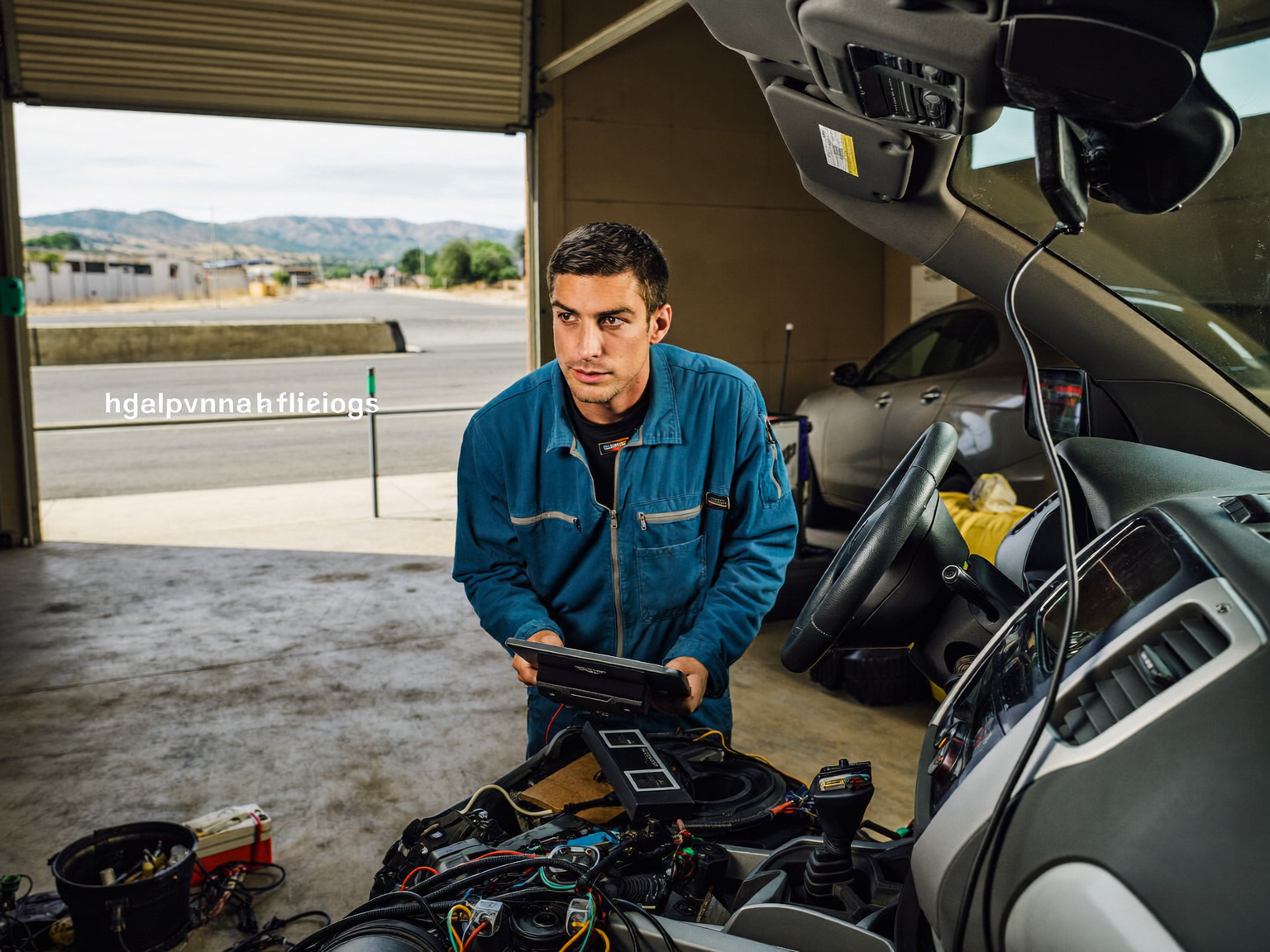
A real check engine light diagnosis in Westminster includes gathering symptom details, retrieving all relevant vehicle data, testing the affected system, and confirming the actual cause of the warning. It does not stop when a scan tool displays a trouble code, and it should not lead directly to replacing whichever component appears in that code’s description.
That distinction matters because the check engine light reports that the engine or emissions control system detected an abnormal condition. The light does not identify a failed part. A complete check engine light diagnosis builds a chain of evidence from the driver’s experience to the final test result, giving us a defensible reason for recommending a repair.
What a Complete Westminster Diagnosis Should Establish
A useful diagnosis should answer three practical questions: what condition caused the warning, why that condition occurred, and what repair will correct it. If any of those answers are missing, there is a greater risk of replacing a functioning component, overlooking a wiring or mechanical problem, or seeing the warning return after the vehicle leaves the shop.
What should happen before a technician connects a scan tool?
We begin by documenting how the vehicle behaves and when the light appeared. Details such as a rough cold start, hesitation while merging onto US-36, a fuel smell after filling the tank, or a warning that appears only during a long climb can narrow the investigation considerably. We also note recent repairs, battery disconnection, fueling events, weather conditions, unusual sounds, and whether the light is steady or flashing. This intake information gives context to the electronic data and helps us reproduce an intermittent problem under the conditions that trigger it.
What information should be retrieved from the vehicle?
A professional scan should collect more than a single generic powertrain code. We look for current, pending, permanent, and history codes in the modules relevant to the complaint. We also preserve freeze-frame information, which records selected operating conditions from the moment a fault was recognized. Depending on the vehicle, that snapshot can include engine temperature, speed, load, fuel-control readings, throttle position, and other data. Clearing codes before saving this information can erase some of the best clues available, so data preservation is an important part of responsible engine diagnostics.
Why a Trouble Code Is Only a Starting Point
Diagnostic trouble codes are labels for detected conditions. They help us choose where to begin testing, but they do not automatically name the component that created the condition.
Does a code identify the part that needs to be replaced?
Usually, no. A lean-condition code could be related to unmetered air, fuel delivery, an exhaust leak, incorrect sensor input, or another issue affecting the control system. A misfire could originate in ignition, fuel delivery, engine compression, wiring, or module control. Even a code that names a specific sensor may mean the sensor’s signal is implausible because of damaged wiring, poor power or ground, contamination, or a mechanical condition elsewhere in the system. We use the code to define the test path, not as permission to order a part.
Why can two vehicles with the same code need different repairs?
A trouble code describes what the control module observed, while each vehicle’s underlying cause can be different. One car may have a connector affected by moisture, another may have a vacuum leak, and a third may have a mechanically worn component that produces similar data. Model-specific system design, maintenance history, modifications, and the exact circumstances surrounding the fault all affect the diagnosis. This is why generic code descriptions cannot substitute for testing the individual vehicle in front of us.
Drivers who want a broader look at the difference between code retrieval and diagnosis can read our explanation of why a parts-store scan is not a complete diagnosis. The important issue is not who owns a scan tool. It is whether the findings are supported by measurements and an understanding of how the system operates.
The Tests That Turn a Code Into an Answer
Once we understand the complaint and have preserved the vehicle’s data, we select tests that can prove or disprove likely causes. The correct test sequence depends on the code, symptoms, vehicle design, and what we observe during the initial inspection.
How do live data and bidirectional controls help?
Live data lets us watch sensor signals and calculated values while the engine operates under changing conditions. Instead of asking only whether a value exists, we consider whether it responds correctly, agrees with related sensors, and makes sense for the vehicle’s operating state. On supported vehicles, bidirectional controls allow us to command certain devices through the scan tool and observe the response. That can help separate a control problem from a component, circuit, airflow, fuel, or mechanical problem without replacing parts as an experiment.
Which physical tests may be included?
The testing plan may include visual inspection, connector and harness checks, voltage-drop measurements, power and ground verification, circuit load testing, smoke testing for leaks, fuel-system testing, ignition analysis, or mechanical engine checks. The selection must follow the evidence. For example, an evaporative-emissions fault calls for a different approach than a cylinder misfire or an oxygen-sensor performance fault. Visual inspection also remains essential because scan data cannot directly reveal every split hose, rubbed wire, loose ground, damaged connector, or installation problem.
Thermal patterns can provide another useful piece of evidence when temperature reveals abnormal resistance, uneven operation, or heat behavior. Our article on thermal imaging in vehicle diagnostics explains where that tool fits. Thermal imaging is not a universal answer, but it can complement electrical and mechanical tests when the fault produces a meaningful temperature difference.
How should a technician handle an intermittent warning?
An intermittent check engine light requires us to preserve clues and recreate the relevant operating conditions without assuming the problem has disappeared. We may compare stored data with live readings, inspect connectors and harness routing, monitor a suspect circuit during a road test, or test the vehicle during the temperature range associated with the complaint. If the fault cannot be duplicated immediately, a responsible conclusion explains what was found, what remains unconfirmed, and what information should be monitored next. Certainty should come from evidence, not from forcing a premature parts recommendation.
Verification Is Part of the Diagnosis
Finding an abnormal result is not the end of the job. We still need to show that the result explains the code and the driver’s symptoms, then determine whether another condition contributed to the failure.
What should happen after the suspected cause is found?
We compare the failed test with the manufacturer’s system operation and check whether the proposed repair addresses the root cause. When a repair is authorized and completed, verification may include repeating the failed test, reviewing live data, checking for returning codes, and operating the vehicle under appropriate conditions. Simply turning off the warning is not proof of a repair. Code clearing resets information and may temporarily extinguish the light even when the original fault remains.
What should the final diagnostic report explain?
The findings should connect the customer’s complaint, stored data, test performed, measured result, and recommended repair in plain language. It should distinguish confirmed faults from observations that may need future attention. If additional testing is required because access, operating conditions, or multiple related faults limit the first round of diagnosis, that should also be clear. A useful report allows the driver to understand why a repair is being recommended rather than being asked to trust a code description alone.
For comparison, our overview of check engine light diagnostics in Boulder covers the general shop process. The standard remains the same for a Westminster driver: gather evidence, isolate the cause, and verify the conclusion before treating a component as failed.
Can You Keep Driving With the Check Engine Light On?
Is a steady check engine light always safe to ignore?
No. A steady light may indicate a fault that does not require an immediate stop, but the vehicle should still be evaluated because severity cannot be judged from the symbol alone. Reduced performance, difficult starting, stalling, overheating, fuel odor, smoke, or unusual noises can change the urgency. A flashing check engine light commonly indicates an active condition such as a severe misfire that may damage other components, so we recommend reducing load and arranging prompt professional guidance rather than continuing a normal drive. If the vehicle feels unsafe or runs poorly, stopping in a safe location is the prudent choice.
Serving Westminster and the Front Range
Westminster driving combines suburban trips with sustained highway operation on US-36, commuting toward Boulder or Denver, and regular travel along corridors such as Sheridan Boulevard and Wadsworth Parkway. A fault that is barely noticeable during a short neighborhood drive may become clear under highway load, during a cold Front Range morning, or while climbing toward the foothills. Those conditions are useful diagnostic context, not just local background.
We work with drivers seeking auto repair in Westminster, including commuters who travel between Westminster, Superior, and Boulder. Vehicles coming from Superior auto repair service often see the same US-36 traffic and rapid weather changes, while drivers looking for auto repair in Boulder may add foothills grades, canyon travel, and greater elevation changes to their routine. When we perform engine diagnostics near Westminster, we account for the conditions under which the warning actually appears rather than relying only on how the vehicle behaves while stationary in the shop.
A real diagnosis is ultimately a standard of proof. We want the code, symptoms, scan data, physical tests, and verification results to point toward the same cause. That approach takes more thought than reading a code, but it gives Westminster drivers a clear basis for making repair decisions and reduces the guesswork that leads to unnecessary parts replacement.
Book the shop Boulder trusts.
Free loaner vehicles for qualifying repairs. Three-year, 36,000-mile NAPA warranty on every covered job.