Transmission Slipping in Erie: Repair or Rebuild?
A slipping transmission does not automatically need rebuilding. Proper diagnosis determines whether the fault is in the fluid system, electronics, valve body, or internal components.
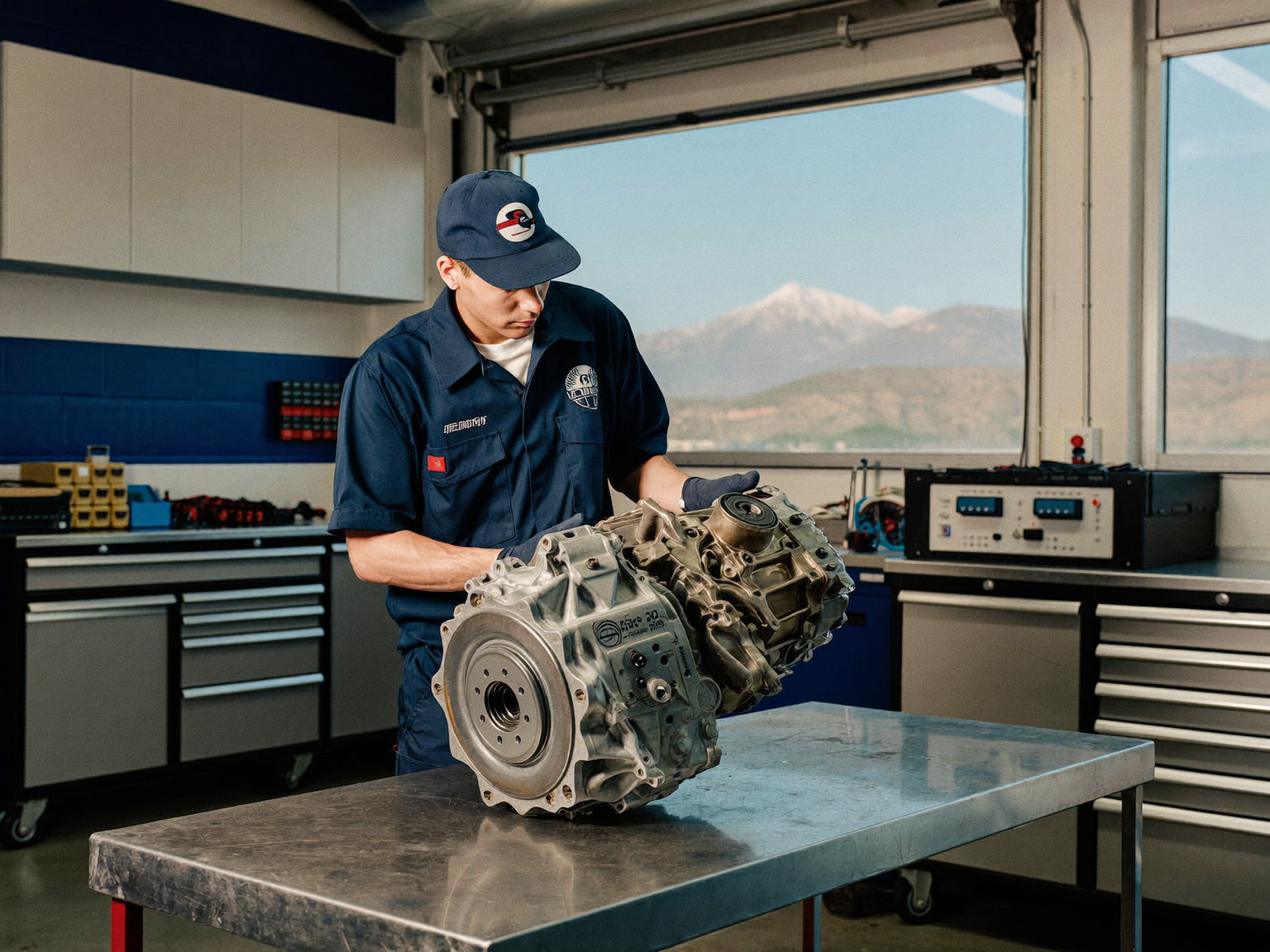
A slipping transmission should be repaired when the cause is limited to a serviceable component, fluid problem, electrical fault, or hydraulic control issue. Rebuilding becomes the better technical choice when testing confirms significant internal wear or damage throughout the unit.
The important point is that slipping is a symptom, not a diagnosis. Before recommending transmission service and repair, we determine what the driver is feeling, when it occurs, and which mechanical or electronic system is failing to apply power correctly.
What Transmission Slipping Actually Feels Like
Drivers use the word “slipping” to describe several different behaviors. The engine may rev without a matching increase in road speed. The transmission may hesitate before engaging Drive or Reverse, flare between shifts, fall out of gear, shudder under acceleration, or feel as though it cannot decide which ratio to use.
Those symptoms can come from the transmission, but they can also originate elsewhere. An engine performance problem may reduce power during acceleration. A failing mount can create a harsh movement that feels like a bad shift. An axle, differential, or transfer case problem can interrupt power delivery. That is why we do not decide between repair and rebuilding based only on the initial description.
Does every slipping transmission need to be rebuilt?
No. Some slipping complaints are caused by low or degraded fluid, an external leak, a faulty speed sensor, damaged wiring, a control solenoid, a valve-body problem, or software-related shift behavior. These faults may be repairable without disassembling the entire transmission. Internal clutch wear, damaged hard parts, excessive debris, or widespread hydraulic leakage can point toward rebuilding, but that conclusion should follow testing rather than guesswork.
Can low transmission fluid cause slipping?
Yes, because an automatic transmission relies on correctly pressurized fluid to apply clutches and control gear changes. If the level is low because of a leak, the unit may hesitate, flare, or lose engagement, especially during turns, acceleration, or temperature changes. Adding fluid without finding the leak is not a complete repair, and using the wrong fluid can create additional problems. Fluid level and condition must be checked according to the vehicle manufacturer’s procedure.
How We Diagnose Transmission Slipping
A reliable diagnosis combines the driver’s observations with a visual inspection, electronic testing, fluid evaluation, and a controlled road test when the vehicle can be driven safely. The process changes with the transmission design. A conventional automatic, continuously variable transmission, dual-clutch unit, and electronically controlled manual each manages power differently.
We begin by asking when the symptom appears. A slip that occurs only when cold suggests a different path than one that begins after an extended Erie-to-Boulder commute. Delayed Reverse engagement differs from an engine-speed flare during an upshift. A shudder while the torque converter locks is not automatically the same as clutch slippage inside the transmission.
What does a scan tool reveal about a slipping transmission?
A professional scan tool can reveal transmission trouble codes, commanded gear, input and output shaft speeds, fluid temperature, solenoid activity, and other manufacturer-specific data. It can help us compare what the control module requested with what the transmission actually did. A code is evidence, not a final answer, which is why our computer diagnostics include data interpretation and physical testing instead of replacing parts solely from a code description.
Why is a road test important?
A road test allows us to reproduce the complaint under known conditions and observe when engine speed, vehicle speed, load, temperature, and commanded gear stop agreeing. We pay attention to engagement from a stop, shift timing, converter operation, noises, vibration, and behavior during light and moderate acceleration. If the transmission cannot move the vehicle reliably or continued operation could cause further damage, we do not road-test it and instead continue with stationary inspection and other diagnostic methods.
Electronic testing may also show that the problem is not inside the transmission. Modern powertrain modules coordinate engine torque with shifting, so an engine fault can alter shift quality or trigger a protective operating mode. When the evidence points outside the gearbox, engine diagnostics help us investigate the related system rather than condemn the transmission.
This is also why a generic code reading is not enough. Our explanation of professional diagnosis beyond a parts-store code scan applies directly to transmission complaints. The code can identify the circuit or behavior the vehicle noticed, but testing must identify why that condition occurred.
When a Targeted Repair Makes Sense
A targeted repair makes sense when the transmission’s overall condition is sound and testing isolates the fault to a specific serviceable area. Depending on the vehicle and transmission design, that may include repairing a leak, correcting a wiring or connector problem, replacing a verified sensor or solenoid, servicing a valve body, addressing a cooling problem, or performing a manufacturer-directed fluid service.
A repair recommendation should explain the evidence. For example, if live data shows an implausible speed-sensor signal and circuit testing confirms damaged wiring, internal rebuilding would not address the actual problem. If hydraulic testing and fluid inspection instead reveal broad internal wear, replacing one solenoid is unlikely to provide a durable result.
Can changing the fluid fix a slipping transmission?
Sometimes a correct fluid service can improve operation when the fluid condition, level, or maintenance issue is genuinely responsible, but fluid service is not a universal cure. It cannot restore worn friction material, repair damaged gears, or seal serious internal leakage. We first inspect the fluid, check for leaks and debris, review the applicable service procedure, and consider the transmission’s behavior before recommending service. We do not treat a flush as a substitute for diagnosis.
Could an electrical problem feel like internal transmission failure?
Yes. A faulty sensor, corroded connector, damaged harness, weak ground, charging-system issue, or failed control component can disrupt shift commands and pressure control. Intermittent electrical faults can be especially misleading because the transmission may operate normally during one trip and enter a limited operating mode during another. Circuit testing and scan data help distinguish a control problem from mechanical slippage, while methods such as thermal imaging in vehicle diagnosis can sometimes provide supporting evidence of abnormal heat or electrical resistance.
When Rebuilding Becomes the Better Choice
Rebuilding involves removing and disassembling the transmission, inspecting its internal parts, replacing failed and worn components, correcting known failure points where appropriate, and verifying clearances and operation during reassembly. It is a comprehensive internal repair, not simply a fluid change or external component replacement.
A rebuild may be justified when friction materials are worn, internal seals cannot maintain pressure, bearings or bushings are damaged, hard parts have failed, or debris has circulated through multiple sections of the unit. The exact decision depends on transmission design, parts availability, overall vehicle condition, and what inspection reveals.
How does fluid condition affect the rebuild decision?
Fluid can provide useful clues, but color alone does not decide the repair. Burnt odor, visible debris, metallic material, or friction material in the pan may support evidence of internal damage. Clean-looking fluid also does not rule out a hydraulic, control, or mechanical problem. We interpret fluid condition alongside codes, operating data, pressure behavior, noises, service history, and the specific slipping pattern.
Is replacement ever more appropriate than rebuilding?
Yes. Depending on the vehicle, transmission design, availability of qualified components, and extent of damage, a remanufactured or suitable replacement unit may be more practical than rebuilding the original. In other cases, rebuilding preserves the original unit while allowing its internal condition to be inspected directly. We compare technically appropriate options after diagnosis instead of assuming that one answer fits every vehicle.
What Erie Drivers Should Do When a Transmission Slips
Reduce unnecessary driving and avoid heavy acceleration, towing, or steep routes until the problem is evaluated. Continued slipping creates heat, and heat can turn a limited fault into broader internal damage. If the vehicle struggles to engage, loses drive unexpectedly, leaks heavily, displays a temperature warning, or cannot keep up safely with traffic, arranging a tow is the safer choice.
Write down when the symptom occurs, including whether the vehicle is cold or warm, which gear is selected, whether warning lights appear, and whether the problem happens during steady cruising or acceleration. Do not clear codes before the appointment. Stored information and freeze-frame data may help us reconstruct the conditions present when the fault appeared.
If a warning light accompanies the slipping, the diagnostic sequence may overlap with the check engine light diagnostic process. Transmission and engine controllers share information, and a powertrain warning may relate to either system or to communication between them.
Serving Erie and the Boulder Area
We provide auto repair for Erie drivers from our Boulder shop, including transmission diagnosis for vehicles coming from Old Town Erie, Colliers Hill, and Vista Ridge. Erie drivers regularly travel along Erie Parkway, County Line Road, Baseline Road, and toward I-25 or US-36, where an intermittent slip can become more apparent during merging, stop-and-go traffic, or sustained driving.
Front Range conditions also matter. Cold starts can change fluid behavior, summer heat can expose cooling weaknesses, and snow can make delayed engagement or unexpected loss of power especially hazardous. Trips west toward Boulder add rolling terrain and foothills driving, which can place more load on a transmission than short neighborhood travel. A Boulder mechanic evaluating the problem should consider how the symptom behaves under those real driving conditions, not only how the vehicle acts while stationary in a service bay.
Repair or Rebuild Starts With Evidence
The correct choice is the least invasive repair that reliably addresses the confirmed failure. That could mean fixing a leak or circuit, servicing a hydraulic control component, rebuilding the transmission, or installing an appropriate replacement.
For transmission repair near Erie, CO, the useful question is not simply whether the vehicle slips. It is where power transfer is being lost, why it is happening, and whether the damage is isolated or widespread. Careful diagnosis answers those questions before major work begins.
Book the shop Boulder trusts.
Free loaner vehicles for qualifying repairs. Three-year, 36,000-mile NAPA warranty on every covered job.